
Security
14 articles
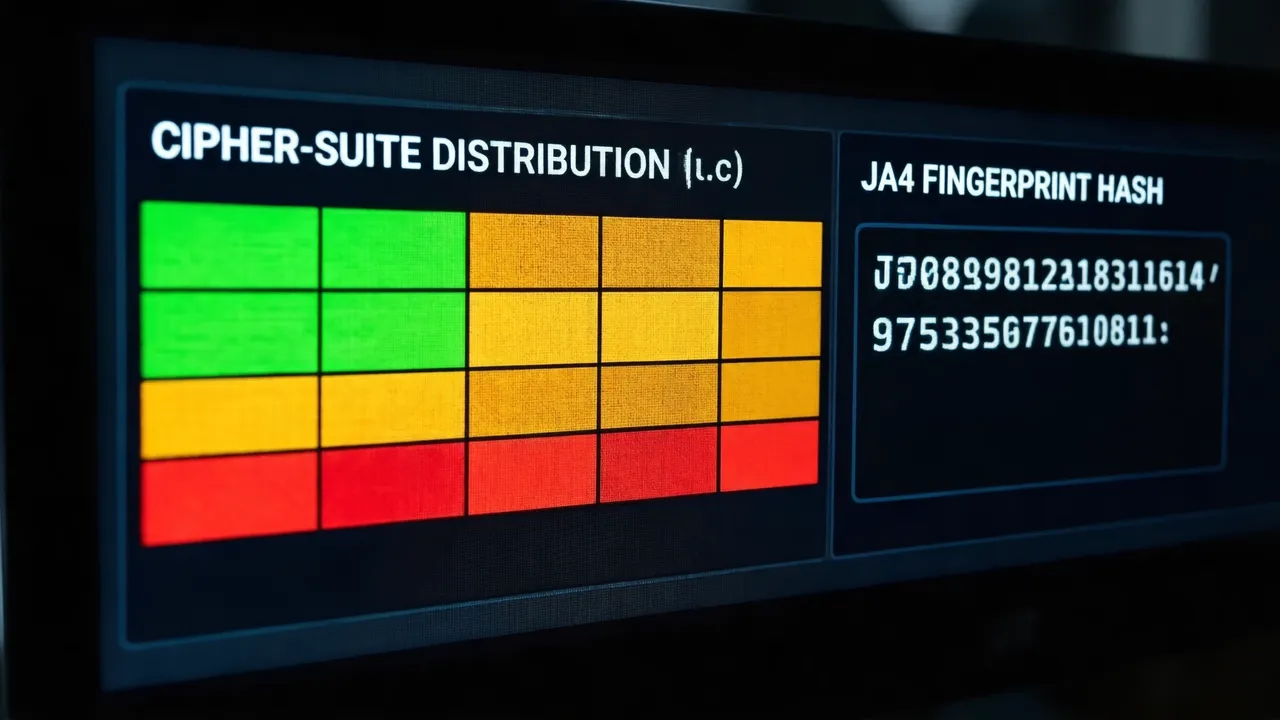
How Weak Is This TLS Setup? Reading Cipher-Suite Distribution and JA4 Fingerprints
Wondering whether a service's TLS cipher suites are out of date? You do not have to walk through handshakes one packet at a time. In PcapDecoder's stats page, open the TLS grade card: read the version and cipher-suite distribution, spot weak-suite red flags, then correlate JA4 fingerprints with SNI to see who is actually using the configuration. A few steps yield an assessment you can defend.
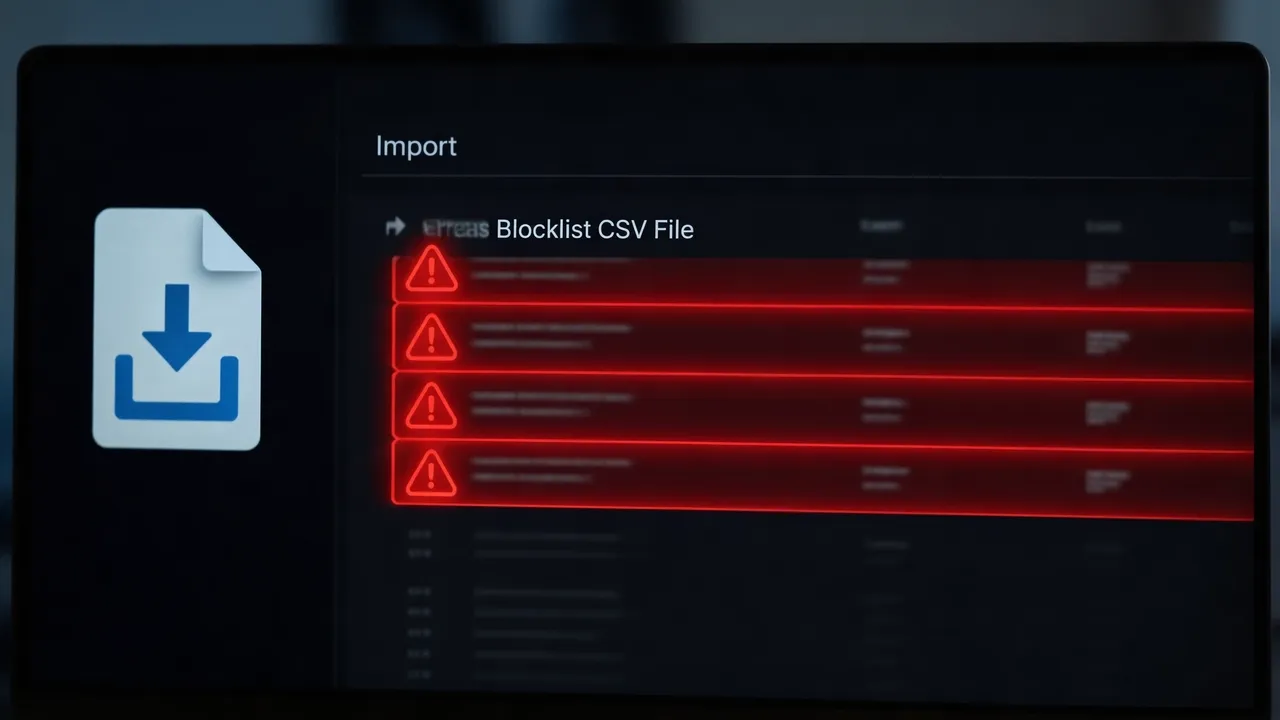
Import a Corporate Blocklist and Let Risky Connections Light Up
Your security team hands you an IP-and-domain blocklist and asks you to check it against a pile of saved captures. Here's a real handoff scenario: import the list in Settings, watch matching connections get flagged in the session list, and let the hits flow into threat analysis and reports automatically.
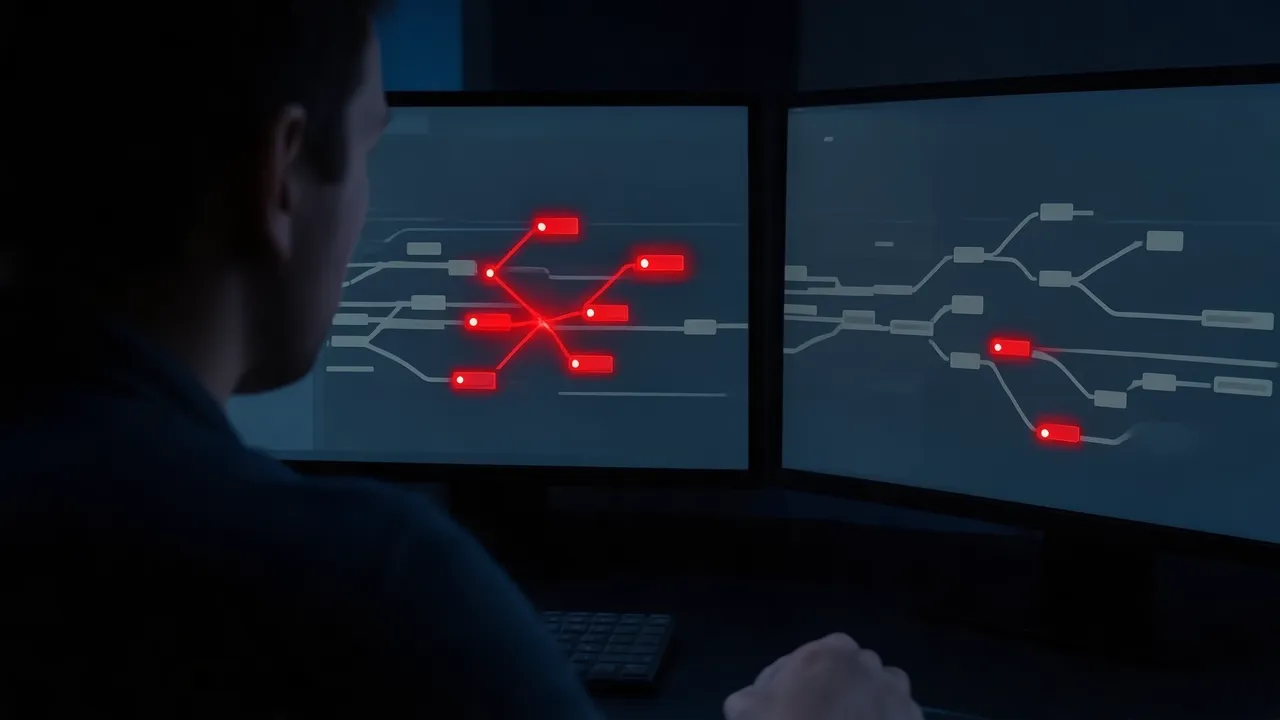
Given a Malware Sample PCAP, What Do You Look At First?
A colleague hands you a suspicious capture. Thousands of packets, a sea of red and yellow flags — where do you even start? This malware pcap analysis walkthrough lays out a fixed order in PcapDecoder: health check, 16-family deep scan, threat card, then the attack graph. It covers how to work through a sample you already have; it does not provide sample pcap files for analysis to download.

Detecting Webshell Traffic Without Relying on Filenames
The hard part about webshells is that the traffic itself is legitimate HTTP: the path may be index.php and the parameter may be a. This article explains scoring across three dimensions — script path, behavioral parameters and code-execution traces — how confidence is computed, and why per-source aggregation beats single-packet matching.

How Much of ATT&CK Can Packet Analysis Actually Cover?
MITRE ATT&CK lists hundreds of techniques, but only a subset leaves traces you can see in a pcap. This article maps PcapDecoder's 16 deep-scan detectors to specific ATT&CK technique IDs, explains what signal each one looks for and what confidence it reports — and marks plainly what packet analysis cannot see.

Detecting LLMNR Poisoning: What Responder-Style Attacks Look Like in a Capture
An attacker does not need to crack a password — answering the broadcast name lookups that fail inside a network is enough to harvest NTLM hashes. This article covers how LLMNR and NBT-NS poisoning works, the two directly decidable signals, and why receiving multiple responses is the real proof.

Detecting Lateral Movement: RDP / SMB / WinRM Hops in a Capture
Lateral movement is the hardest step to spot from single-point alerts, because every hop uses a legitimate protocol. This article explains how internal-to-internal admin port connections are aggregated, how admin shares are recognized, what role reversal signals, and why the internal-IP direction is central to this whole class of detection.

Identifying Kerberos Attacks: Packet Signatures for Kerberoasting, AS-REP and Golden Tickets
Most domain attacks concentrate on Kerberos, yet its messages are ASN.1 DER and look opaque. This article decomposes four attacks into decidable message differences: who requests a ticket, which encryption type is requested, whether an AS exchange preceded it, and whether the same ticket appears from two sources.

Detecting Authentication Brute Force: The Three Attacks Behind 401, 530 and 535
Brute force is among the easiest attacks to miss in a capture, because it looks like a stream of perfectly ordinary login requests. This article gives the counting criteria and thresholds for HTTP, FTP, SMTP and POP3, explains how brute force, password spraying and guessing are separated into buckets, and how to keep false positives down.

How to Find Plaintext Credentials in Network Traffic: An Internal Network Checkup
Plaintext passwords over HTTP, weak FTP credentials, bare SMTP — internal systems still using plaintext protocols are laying their credentials in front of anyone capturing packets. This article explains the risk patterns of common plaintext protocols and how to find plaintext credentials in network traffic.

Detecting NetSupport RAT Traffic: When Legitimate Remote Admin Software Is Abused
NetSupport Manager is legitimate commercial remote admin software that attackers abuse as a RAT. Using a real infection-traffic sample, this article breaks down the traffic signatures of this "gray-hat" remote access tool and how to distinguish it from legitimate operations remote control.

How to Detect Formbook's DGA Domains: From Pseudo-Words to Traffic Verification
Formbook is one of the most active info stealers of the past two years, using DGA domains to evade blocklists. Using a real malicious traffic sample, this article explains how to recognize DGA domains and how to use PcapDecoder to match suspicious domains in a capture with their exfiltration behavior.

How to Detect DNS Tunneling
However tight the firewall, DNS is rarely blocked. Attackers exploit this by encoding data into domain queries and exfiltrating it. This article explains how DNS tunneling works, the four detection signals, and the complete workflow for detecting it with PcapDecoder.

How to Identify CVE-2024-4577 Attack Traffic: PHP-CGI Exploitation in the Wild
CVE-2024-4577 is a critical parameter injection vulnerability affecting PHP on Windows, already exploited at scale in the wild. Using a real attack-traffic sample, this article shows what an exploit request looks like and how to identify CVE-2024-4577 attack traffic in a packet capture.